A rising pH in your hydroponic reservoir is a common and confusing problem.
You set the pH to the right level. You check it. A day or two later the pH is higher.
If it keeps climbing, nutrients lock out and plants show deficiency signs.
This guide explains why pH drifts upward, what exactly causes it, and how you can stop it.
I write in plain English. Sentences are short. The advice is tuned to small farms, balconies, and hobby systems in India.
Key words: hydroponic pH drift, high pH in hydroponics, nutrient solution pH, alkalinity, bicarbonate, algae photosynthesis, ion uptake, pH stabiliser, buffer, CO₂ degassing, Indian hydroponics.
The short answer — four main reasons your pH climbs
- Plants taking up more anions than cations. This makes the solution more alkaline.
- Alkaline source water (bicarbonates / high alkalinity). Tap water with bicarbonate pushes pH up.
- Photosynthesis by algae or plants that removes dissolved CO₂ during the day. Less carbonic acid means higher pH. Go Green Aquaponics
- Temperature and gas exchange (CO₂ degassing) plus nutrient depletion. Warm water and evaporation let CO₂ escape and shift pH upward. hydrocrop.co.uk
Those four alone explain most steady, daytime or multi-day rises you’ll see.
1) Ion uptake by roots: the chemistry your plants cause
Plants do not only drink water. They take up charged ions — cations (like K⁺, Ca²⁺) and anions (like NO₃⁻, SO₄²⁻). To keep electrical balance, roots trade ions or release H⁺ (acid) or OH⁻/HCO₃⁻ (base). If a crop absorbs more anions than cations overall, the solution becomes more alkaline and pH rises. If the opposite happens, pH drops.
Most hydroponic crops on nitrate-based feed tend to take up more nitrate anions, which commonly causes a slow upward drift in pH unless you correct it regularly. This is a natural, biological cause — not a meter fault. cannagardening.com+1
Practical note: different species and even different growth stages shift their ion uptake balance. Young leafy greens may behave differently from fruiting tomatoes. So expect system-specific patterns.
2) Your source water is quietly buffering the solution
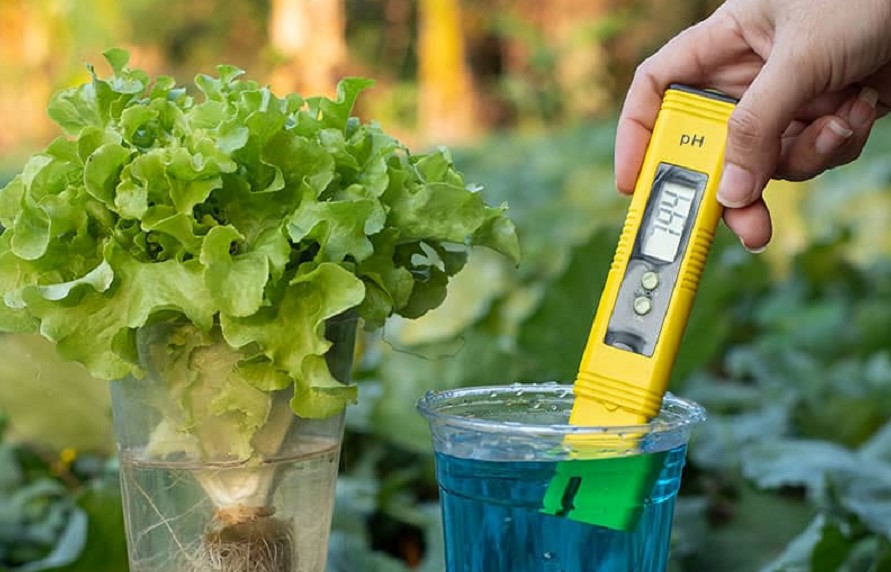
If your tap water has high alkalinity (bicarbonate/carbonate content), it resists acid additions. Alkalinity acts like a cushion that pushes pH upward and makes it hard to keep pH low without lots of acid. Many municipal waters in India have measurable bicarbonate — especially groundwater or hard water sources. That background buffer will slowly raise pH as nutrients are consumed and the solution chemistry changes. OSU Extension
What to do: test water alkalinity (as ppm or meq/L) or try using low-alkalinity water sources like RO (reverse osmosis) water if possible. If you must use tap water, lower the starting alkalinity by letting fresh water sit exposed to air (partly helps CO₂ equilibrate) or pre-treat with acid before you mix nutrients.
Also Read Winter Plant Care in India: Smart Ways to Protect Your Plants from Heat and Sun 🌞🌿
3) Algae and photosynthetic life: day-night pH swings
Algae are a frequent, sneaky cause of rising pH — and fast pH swings. During daylight, algae and plants photosynthesise. They remove dissolved CO₂ from the water. Dissolved CO₂ forms carbonic acid, which lowers pH. When algae remove CO₂, carbonic acid falls and pH rises. At night, algae respire and release CO₂ back into the water, which can make pH fall again. The result is a diurnal swing: pH higher in the afternoon, lower at night.
If your reservoir is exposed to light, algae growth can be large enough to steadily push the daytime pH higher and higher, making pH control frustrating. Covering reservoirs and keeping light out prevents most algal blooms. Go Green Aquaponics+1
4) Temperature, CO₂ degassing and nutrient changes
Warm nutrient solution holds less CO₂. When water warms (hot midday, poor ventilation, direct sun), dissolved CO₂ escapes to the air. That has the same effect as algae photosynthesis — fewer carbonic acid molecules and a higher pH. Also, evaporation concentrates ions and changes electrical conductivity (EC). Concentration changes can shift the balance of ions and alter pH.
Finally, as plants use up particular nutrients, the ionic balance of the solution shifts. For example, depletion of certain cations or increase in relative anion fractions pushes pH upward. That is why pH often creeps up over multiple days in a working grow. hydrocrop.co.uk+1
Common scenarios Indian growers see (and what they mean)
- pH rises every afternoon, drops overnight. Classic CO₂/ photosynthesis / temperature swing. Shade reservoir and prevent algae. Check day-night patterns. Go Green Aquaponics
- pH slowly climbs over a week and keeps climbing. Likely ion uptake imbalance and insufficient acid additions, or high alkalinity water buffering the solution. Consider water source and buffering. OSU Extension+1
- pH jumps after adding fertiliser or water. Check if the fertiliser has high carbonate/bicarbonate or if you added high-alkaline water. Also check mixing order—some salts change pH when mixed too concentrated.
- pH stable but plants show deficiency signs. Even if pH hovers, EC or nutrient ratios may be wrong. Don’t chase pH only — check EC and nutrient balance.
How to stabilise pH — practical steps you can implement now
- Use clean, low-alkalinity water when possible. RO water is ideal for small systems. If you must use tap water, test alkalinity and plan for more frequent pH corrections. OSU Extension
- Cover reservoirs to block light. Do this first. It’s cheap and prevents algae-driven pH swings. Black lids, reflective blankets, or opaque containers work well. Growee Smart Hydroponics
- Monitor pH and EC daily. Small, regular corrections are better than large swings. Keep a log to spot patterns (time of day, after mixing, after feeding).
- Adjust water temperature and ventilation. Keep nutrient tanks shaded and cool. Avoid direct sun heating. Cooler water holds CO₂ and stabilises pH. hydrocrop.co.uk
- Balance nitrogen forms if possible. Ammonium vs nitrate ratios affect pH. Remember: nitrification (ammonium → nitrate) releases protons (acidifies) while nitrate uptake often leads to pH rises. If you use organic or ammonium sources, microbial activity can shift pH in other directions so monitor closely. ScienceDirect+1
- Use buffers or stabilisers carefully. Some growers use phosphate buffers or commercial buffering agents to reduce the amount of pH correction needed. Use these only with good guidance — buffers change nutrient chemistry and can add unwanted ions. Resin beads and slow-release buffers exist for larger systems. ResearchGate
- Control algae biologically and mechanically. Clean lines, blackout reservoirs, and gentle hydrogen peroxide treatments (used sparingly and safely) help. Avoid feeding algae with light and warm temps. OSU Extension
- Top up nutrients regularly and keep EC stable. Instead of huge top-ups, replace a portion of the reservoir with fresh solution or water and rebalance nutrients. This avoids ionic imbalances that push pH.
Quick checklist for Indian hydroponic growers
- Test your source water for alkalinity and TDS.
- Use opaque tanks or cover reservoirs to stop light.
- Keep tanks shaded and cool to reduce CO₂ loss.
- Log pH at the same time each day. Note patterns.
- Adjust pH little and often. Use food-safe acids (phosphoric, citric) or commercial pH-down.
- Consider RO water or pre-acidify hard water before adding nutrients.
- Clean the system regularly to avoid biofilm and algae.
- If you run aquaponics, remember fish and nitrifying bacteria complicate ideal pH — balance needs carefully. ASHS+1
FAQs — quick answers for common worries
Q: My pH rises even when I add acid. Why?
A: If source water is high in bicarbonate, the alkalinity can neutralise added acid. Also check algae or daytime CO₂ loss. Use RO water or pre-treat water if this keeps happening.
Q: Is a daily pH change of 0.2–0.5 normal?
A: Yes. Small daily swings are normal, especially if light and temperature vary. Watch for steady upward trends or big spikes — those need action.
Q: Can I stop pH drift forever with buffers?
A: Buffers reduce swings but do not eliminate biological effects. Buffers add ions and change chemistry — use them sparingly and test how your crop responds. ResearchGate
Q: Is algae the worst enemy for pH control?
A: Algae are one of the easiest causes to prevent and one of the fastest to create pH headaches. Cover your reservoir — that simple step often solves daily pH spikes. Growee Smart Hydroponics
Q: Should I change nutrient brands if pH keeps rising?
A: Not necessarily. First check water alkalinity, algae, temperature, and ion uptake. Brand changes sometimes help but often mask a deeper issue with water or system management.
Final thought — treat pH as a system symptom, not the only problem
pH is a sensitive indicator of many processes in hydroponics. It tells you about plant uptake, water quality, microbes, algae, temperature, and mixing practices. When pH keeps going high, look for the root cause — often it’s alkalinity, algae, or ion uptake patterns — and fix the system around it. Small, routine actions (cover reservoirs, cool and shade tanks, monitor daily) will keep pH stable and make feeding your plants much easier.
If you want, I can make a custom troubleshooting sheet for your specific system (DWC, NFT, ebb and flow) and water source. Tell me your city and whether you use tap or RO water, and I’ll tailor step-by-step checks you can do this week.